

Benches and Lanterns
Dirtmouth Lantern Loaf
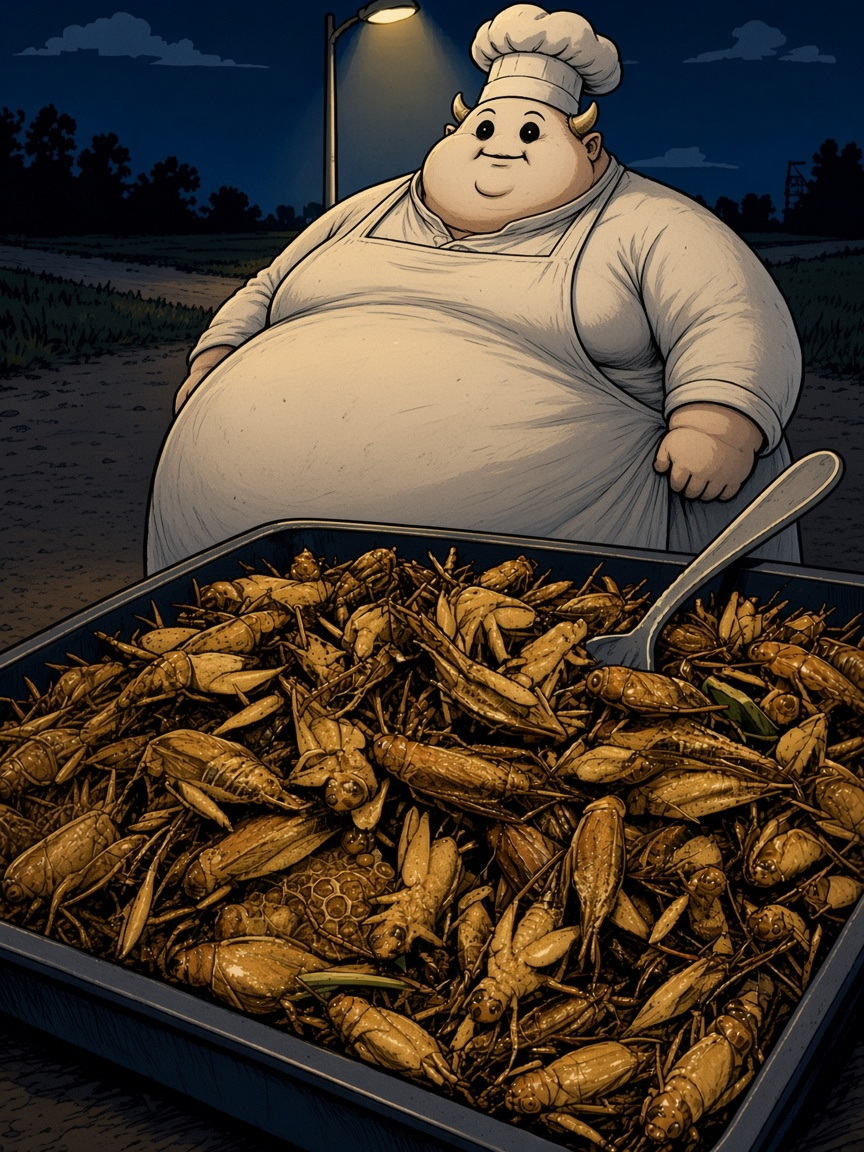
Dirtmouth · roasted crickets, mealworms
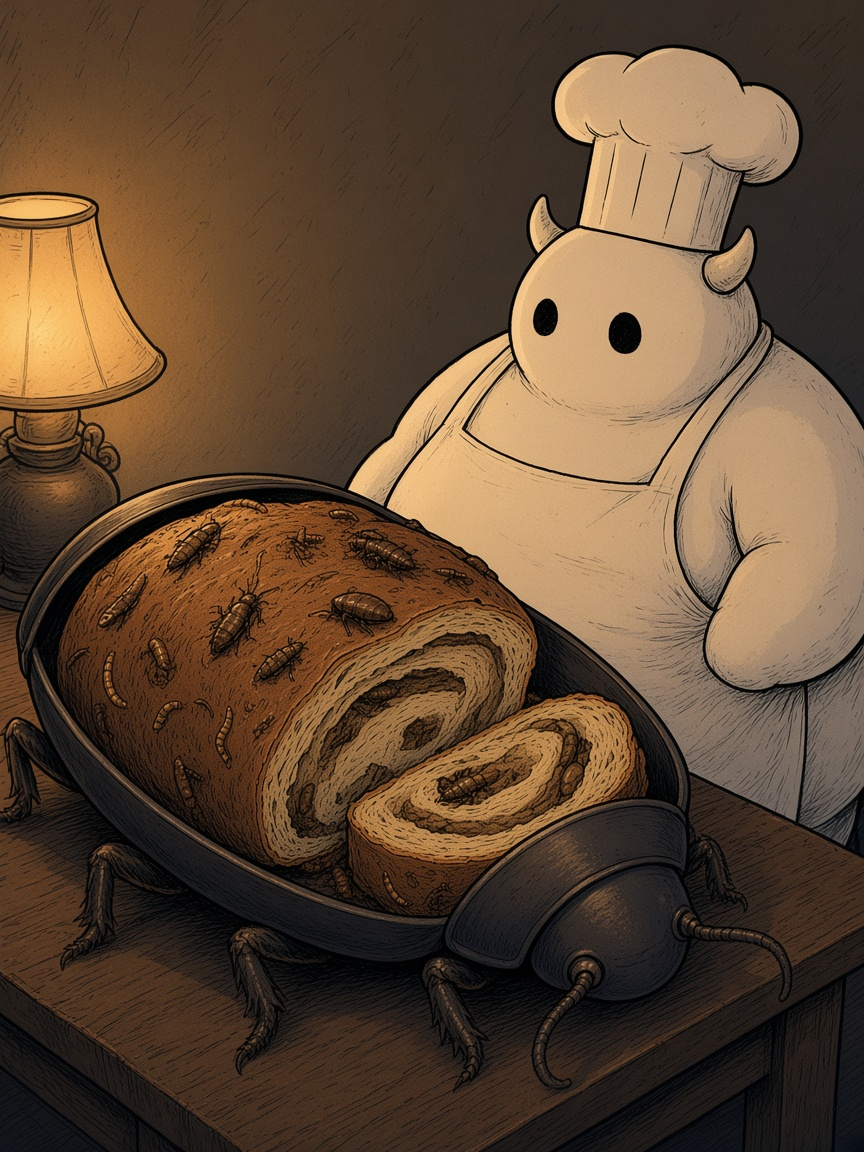
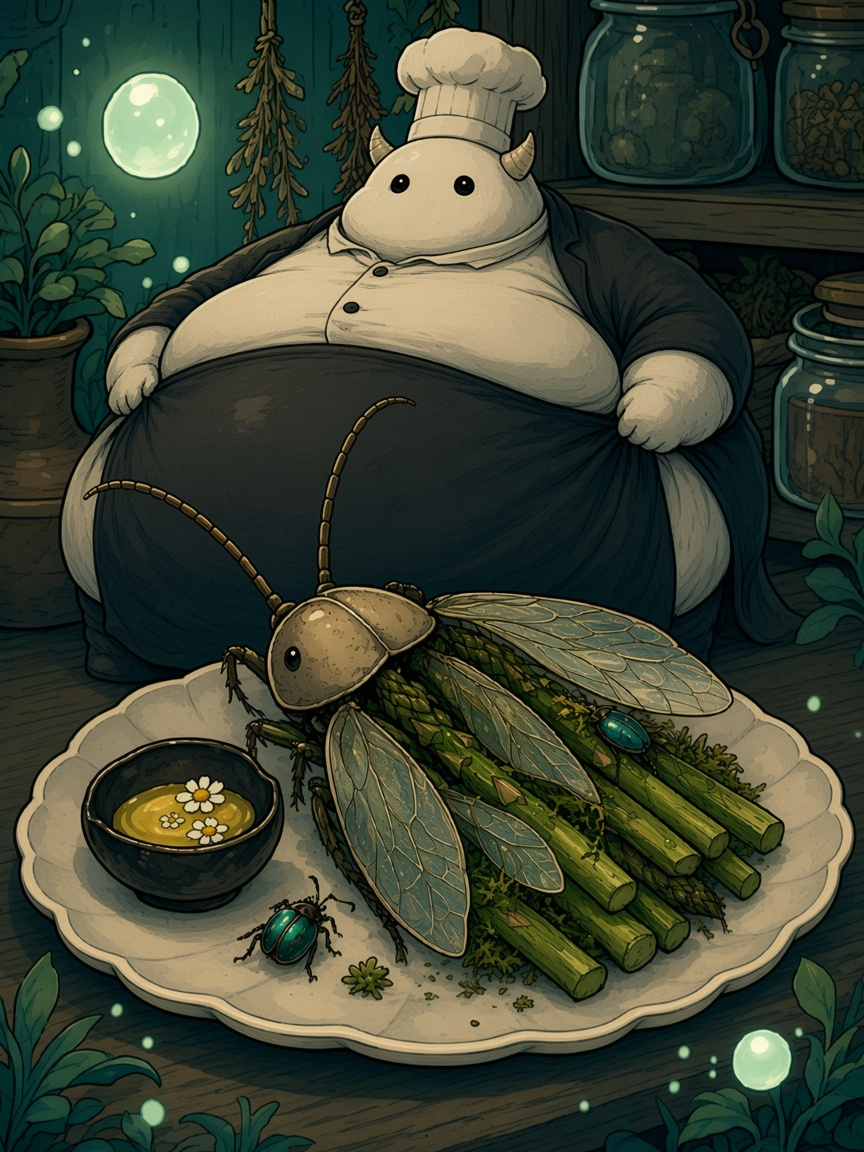
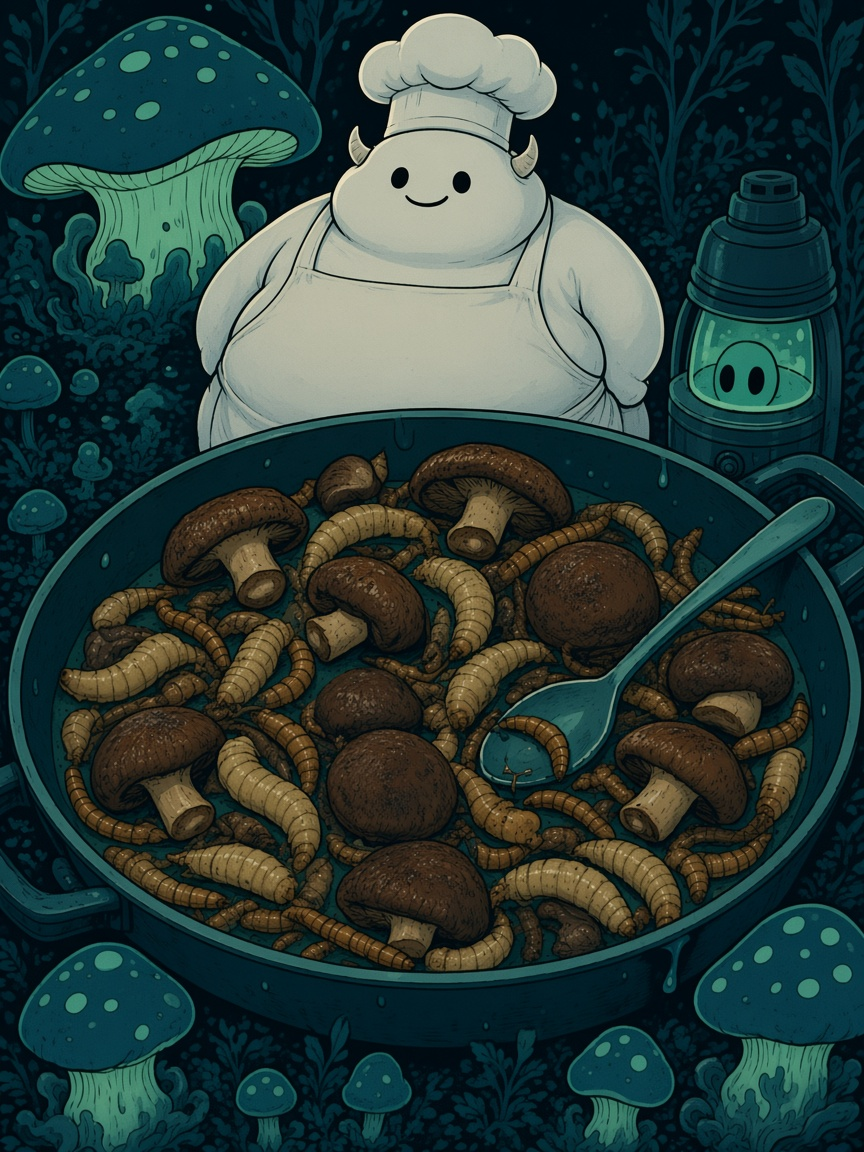
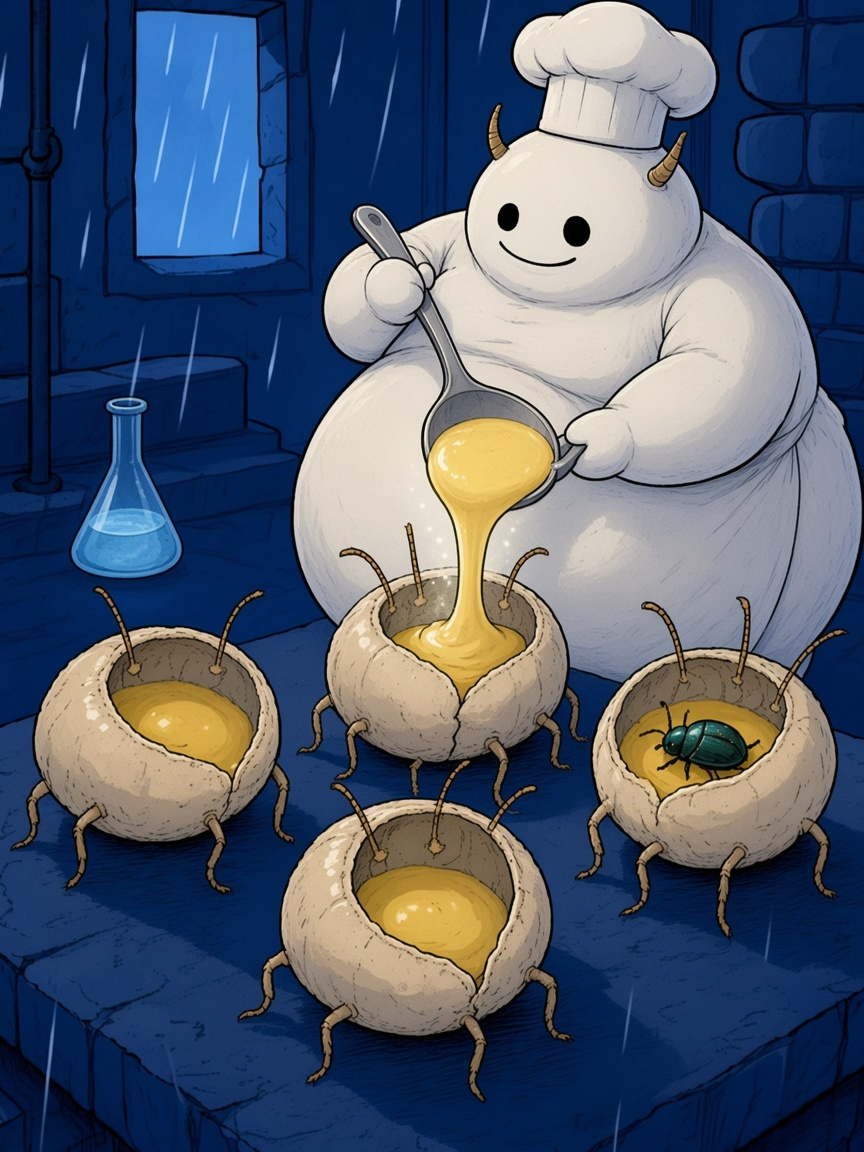
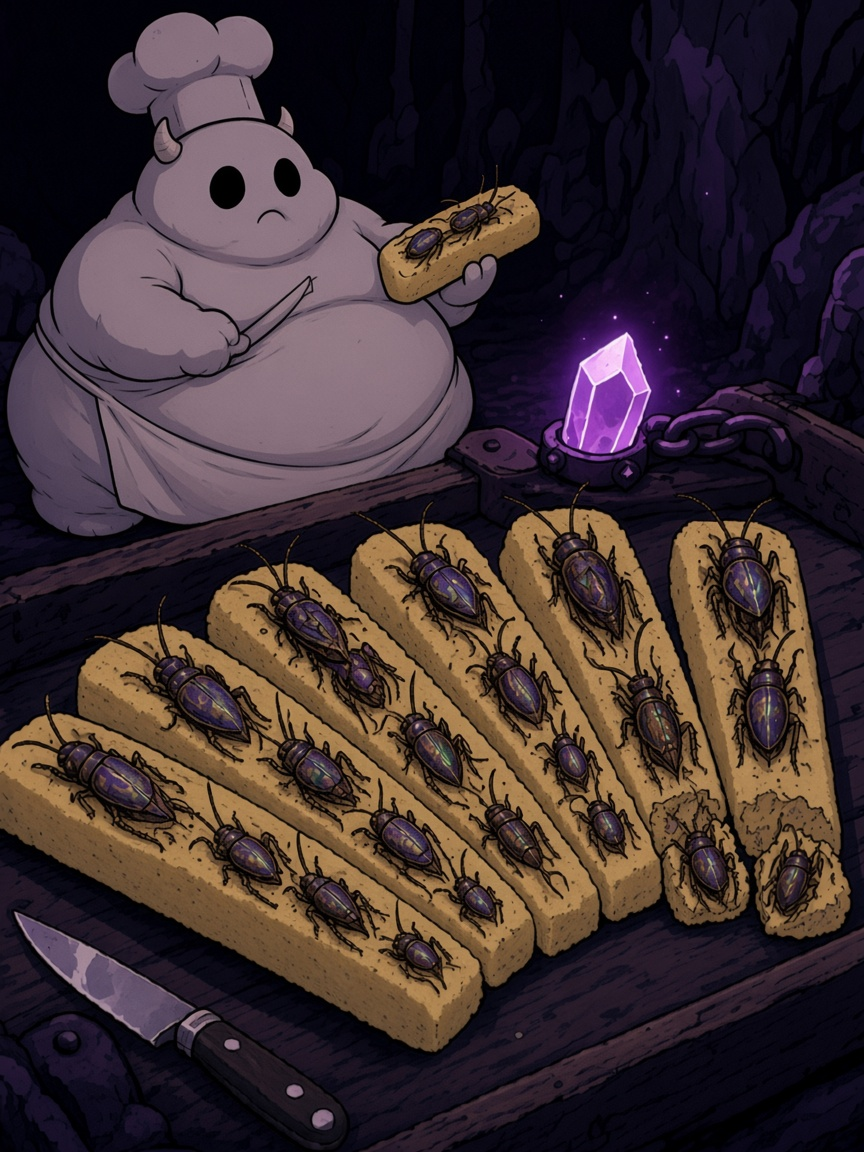
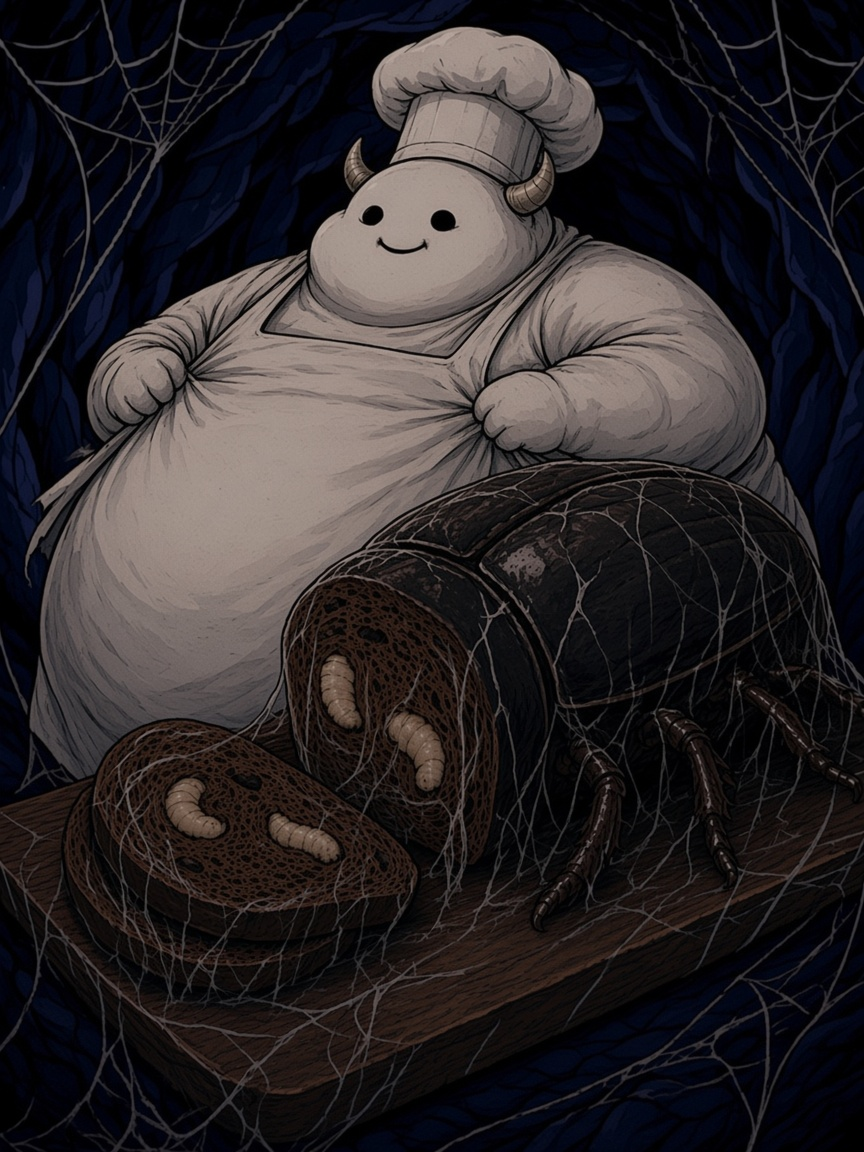
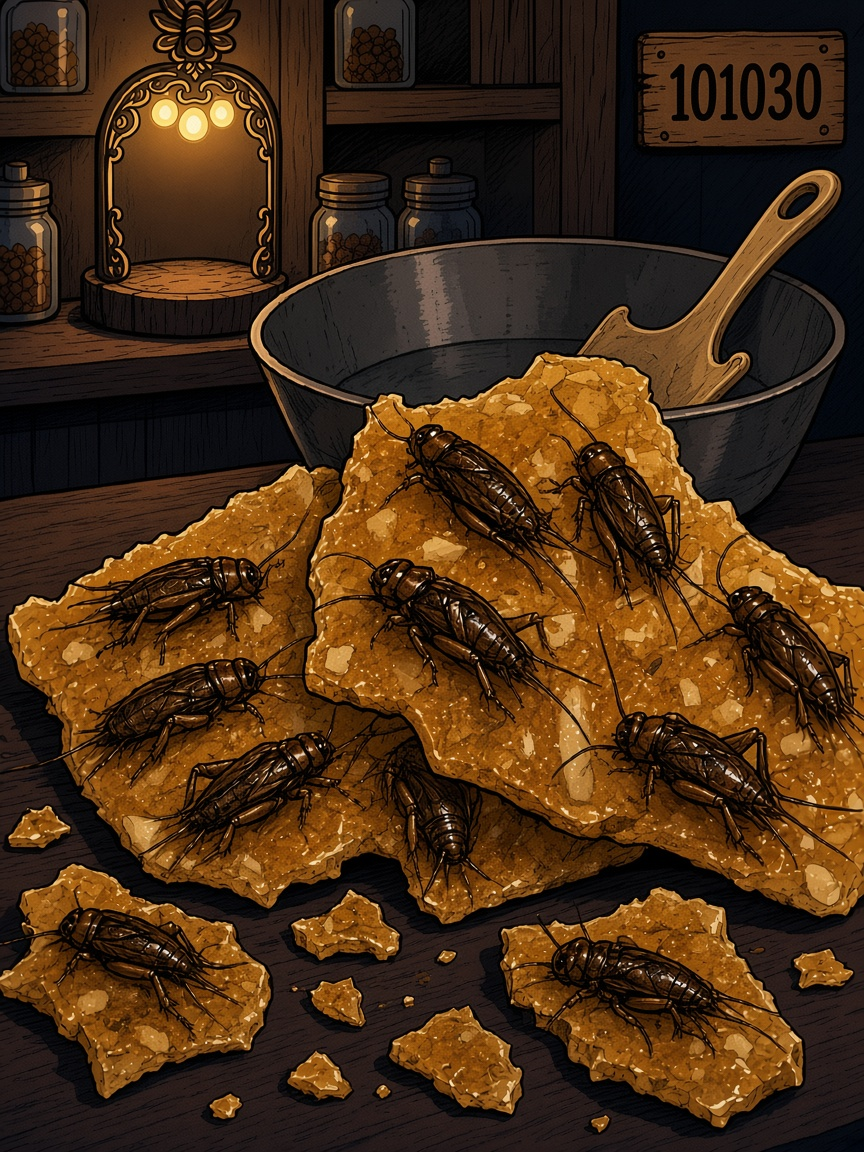
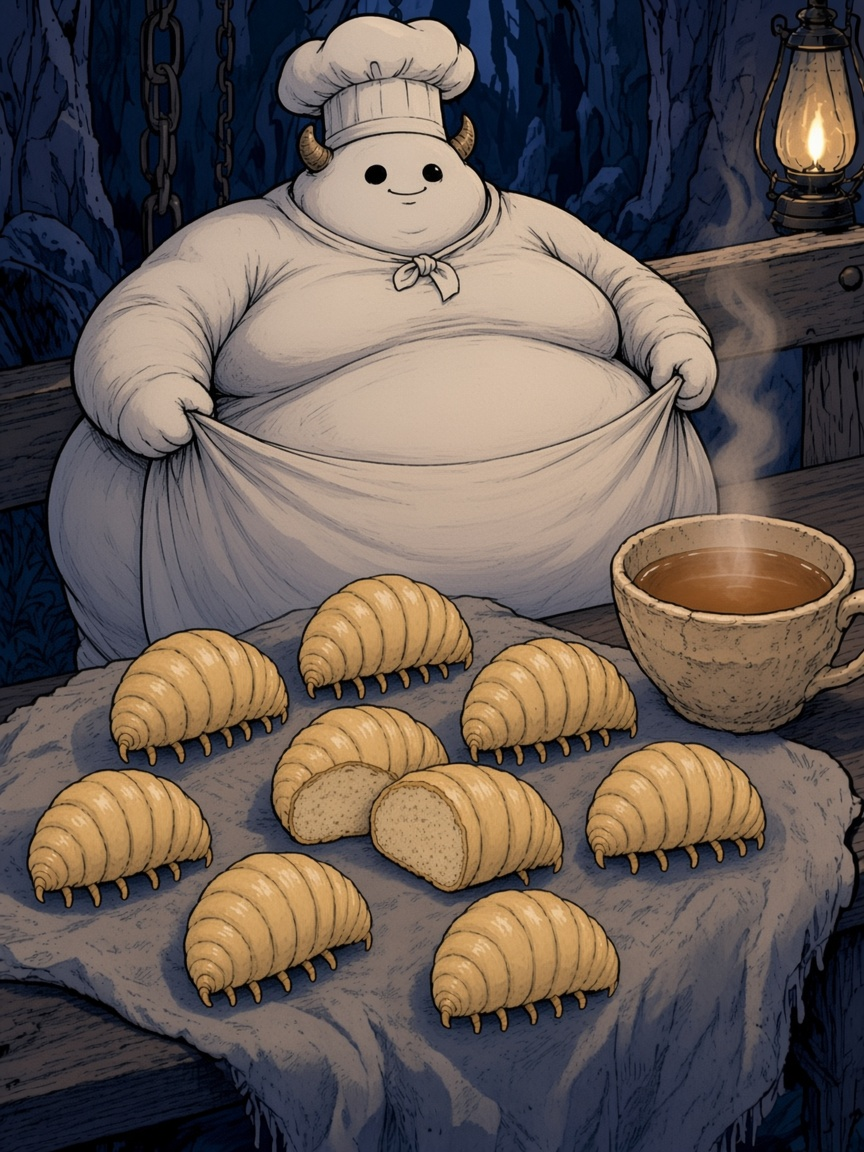
The lamp at the town's edge burns low, and the bread still has to be made. This loaf pulls apart in warm cheeks of crumb, the top browned with milk until it looks like lantern glass that has taken weather. It is plain on purpose. Butter finds the seams. What keeps is enough. Roasted crickets and a pale mealworm are pressed into the top.
- Servings
- 1 loaf, 12 pull-apart pieces
- Prep
- 25 min
- Cook
- 35 min
- Total
- 3 hr
Ingredients
3/4 cup / 180 ml
whole milk, plus 1 tbsp / 15 ml for the crust
Pasteurized. Warm the 3/4 cup; keep the extra tablespoon cold.
2 1/4 tsp / 7 g
instant yeast
One standard packet.
3 tbsp / 38 g
granulated sugar
1 large (about 50 g out of the shell)
egg
A grocery egg. Most are not pasteurized in the shell. The loaf is baked to 190°F / 88°C; do not taste the dough.
3 tbsp / 42 g
unsalted butter, melted and cooled, plus 1 tsp / 5 g for the pan
Cool the melted butter below 110°F / 43°C before it meets the yeast.
1 1/4 tsp / 7 g
fine sea salt
Weigh it. If you only have kosher salt, still use 7 g.
3 cups / 360 g
bread flour
Weigh the flour. A cup of bread flour packed hard will make the loaf dry.
2 tbsp / 10 g
dried whole crickets and dried mealworms, already roasted
Labeled for human consumption. Not feeder insects, bait, pet food, or wild bugs. Press them into the tops. The loaf bakes at 350°F / 175°C for at least 30 minutes. Skip this garnish if you have a shellfish or crustacean allergy.
Method
- 1
Butter a 9×5 in / 23×13 cm loaf pan with the 1 tsp butter. Warm the 3/4 cup / 180 ml milk to 100–110°F / 38–43°C. If it climbs past 120°F / 49°C, cool it before you add yeast.
- 2
Stir the yeast and sugar into the warm milk. Wait 5 minutes. The surface should look creamy and a little swollen. If it stays flat and lifeless, the yeast is dead or the milk was too hot; start over.
- 3
Whisk in the egg, the cooled melted butter, and the salt. Stir in the bread flour until no dry pockets remain. The dough should be soft and slightly tacky, about 680 g / 1 1/2 lb including the milk and egg.
- 4
Knead in the bowl, then on a clean counter, for 8 minutes, until the dough is smooth and springs back slowly when pressed. Use a scraper rather than a heap of extra flour. If it sticks badly, dust with at most 1 tbsp / 8 g more bread flour.
- 5
Set the dough in a lightly oiled bowl, cover, and let it rise in a warm spot about 75°F / 24°C until doubled, 60–75 minutes.
- 6
Turn the dough out and divide it into 12 equal pieces, about 57 g each if you used the gram weights. Roll each into a smooth ball. Set them in the pan in three rows of four, touching.
- 7
Cover and let the pan rise until the dough domes just above the rim, 35–45 minutes. Heat the oven to 350°F / 175°C while they rise.
- 8
Brush the tops with the remaining 1 tbsp / 15 ml milk. Press the roasted crickets and mealworms into the tops. Bake 30–38 minutes, until the crust is deep gold, like a lit lantern, and an instant-read thermometer in the center of a middle piece reads 190°F / 88°C. Do not let the probe touch the pan. If the top is dark before the center is 190°F / 88°C, tent the loaf with foil and keep baking.
- 9
Cool in the pan 10 minutes, then turn out. Pull the pieces apart. The crumb should be set and moist, not glossy-wet or sticky like dough. Do not serve it under temperature.
Bake until an instant-read thermometer in the center of the loaf reads 190°F / 88°C and the crumb is set, not wet or doughy.
People with a shellfish or other crustacean allergy can react to insects as well, and they should skip every recipe that uses crickets, mealworms, or cricket flour.